Rainbow Apple: A Designer’s Honest Review for Real Embroidery Projects
As someone who regularly tests and integrates embroidery designs into client work, Etsy listings, and custom apparel, I recently gave Rainbow Apple a close look. It’s not just about how it appears on screen—it’s about how it translates into actual stitched fabric, how it holds up across different materials, and whether it’s versatile enough to be used in multiple product types.
First Impressions: Whimsical, Cheerful, and Approachable
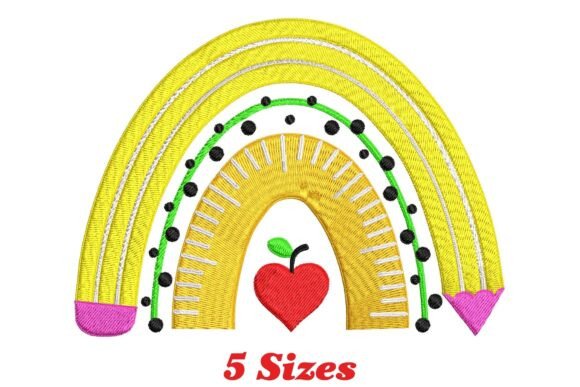
When I first opened the Rainbow Apple embroidery file, the overall mood struck me as lighthearted and inviting. The design features a stylized apple with a curved rainbow arching over the top, giving it a soft, almost animated look. The layout is balanced, not too busy, and feels like it would work well in both children’s and casual adult designs.
The level of detail is moderate—there’s enough definition in the apple shape and rainbow arcs to make it visually engaging, but it doesn’t overwhelm the eye. This makes it ideal for embroidered patches, tote bags, or personalized baby items where simplicity and charm are key.
How Rainbow Apple Performs in Real Embroidery Projects
I tested Rainbow Apple on a few different substrates to see how it would behave. Starting with a standard cotton tote bag, the design stitched cleanly with minimal thread pull or distortion. The satin and fill stitches held up well, and the color transitions were smooth. On a sweatshirt, the design maintained its integrity, though I did adjust the stabilizer slightly to account for the thicker fabric.
For a custom baby onesie, I resized the design slightly smaller, and it still held its shape without losing clarity. The rounded apple form and gentle rainbow arc gave the piece a soft, friendly feel that worked well for baby items. It also looked great on a kitchen towel, adding a pop of color and personality without being too bold.
When preparing a holiday-themed embroidered patch, I swapped out the thread colors to match a winter palette, and Rainbow Apple adapted surprisingly well. While it’s clearly designed with a playful tone, it can be tweaked to suit seasonal themes or boutique-style merchandise with a bit of creativity.
Where to Use Rainbow Apple with Care
Like any embroidery design, Rainbow Apple has its limitations. I noticed that on very stretchy fabrics like jersey knits, the design can pucker slightly if not stabilized properly. It’s also important to consider the hoop size—especially if you're working with smaller machines or limited embroidery areas.
Dark fabrics can mute the vibrancy of the rainbow, so I recommend testing thread colors or adjusting brightness in your embroidery software before stitching. I also found that on textured or loosely woven materials, the fill stitches needed a bit more density to prevent the fabric from showing through.
If you're considering using this design on curved surfaces like baseball caps or around the shape of a mug sleeve, be mindful of how the design's flat layout might distort slightly. And while Rainbow Apple doesn’t include tiny lettering or overly delicate corners, it’s still wise to inspect small details under magnification before stitching on final products.
Visual Impact and Market Appeal
From a product presentation standpoint, Rainbow Apple adds a touch of personality that elevates handmade items. Whether used on a boutique tote bag or a personalized gift, it gives the finished product a polished, intentional look. For Etsy sellers or small shop owners, this kind of design helps build brand consistency when used across multiple items like tea towels, aprons, or nursery decor.
It’s also a design that customers tend to respond well to—especially when used in children’s apparel or school-themed items (which fits the design’s playful nature). It doesn’t scream “school,” but it could easily be incorporated into back-to-school merchandise or teacher gifts without feeling forced.
In terms of professionalism, Rainbow Apple doesn’t look cheap or overused. It has a unique character that makes it stand out among generic embroidery files, and that’s a big plus when you're trying to differentiate your handmade shop or custom embroidery business.
Designer Notes for Practical Use
- Test on scrap fabric first—especially if you’re using a new stabilizer or unfamiliar fabric type.
- Check thread color contrast—the rainbow effect relies on color transitions, so make sure your thread choices enhance the design, not dull it.
- Review stitch density—on lightweight or stretchy materials, a slightly denser fill stitch may be necessary to maintain clarity.
- Confirm hoop size—if you're working with a smaller hoop, resizing or simplifying the design may be needed.
- Inspect small details—while this design isn’t overly intricate, subtle curves and edges should still be checked for stitch accuracy.
- Test in black and white mockups—this helps you see the design’s structure and how it might look on neutral-toned items.
- Compare light and dark fabric backgrounds—the rainbow colors may appear differently depending on the base fabric.
- Use proper stabilizer—especially for stretchy or textured fabrics to prevent distortion.
- Check commercial use licensing—if you're selling finished products or digital embroidery files, confirm the license terms before distribution.
Final Thoughts: A Versatile Design for Everyday Embroidery
Rainbow Apple is a solid addition to any embroidery designer’s toolkit. It’s not overly complex, but it carries enough visual interest to make a statement. Whether you're creating custom apparel, personalized gifts, or boutique-style merchandise, this design holds up across multiple use cases.
As with any embroidery file, success depends on how you apply it. Rainbow Apple works best when thoughtfully integrated into your product line—whether that’s a stitched sweatshirt for a school-themed gift, a tote bag for a small shop, or a patch for a craft fair display. It’s a design that brings a smile without being too childish, and that kind of balance is rare in today’s embroidery market.